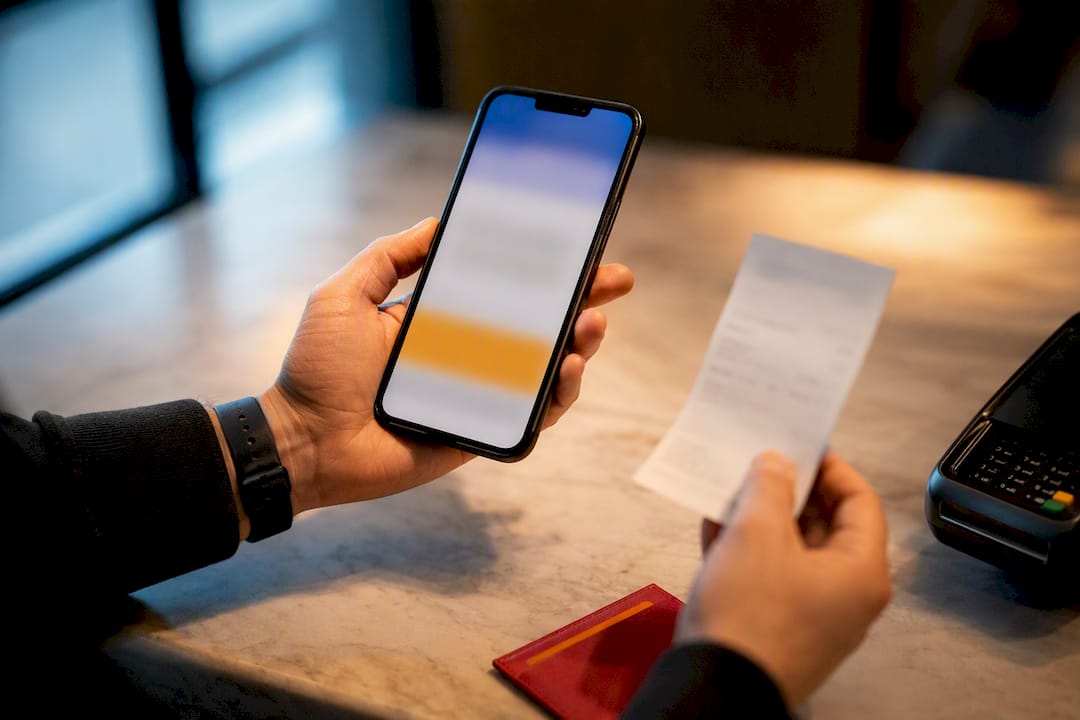
Yes. Under California’s Honest Pricing Law, advertised prices must include all mandatory fees starting July 1, 2024, with narrow exceptions for government taxes and reasonable shipping. Restaurants get a separate carve-out under SB 1524. Consumers who get hit with a hidden fee anyway may have a private right of action worth statutory damages starting at $1,000, plus attorney’s fees.
TL;DR:
- All mandatory fees, such as service charges and processing fees, must be included in the advertised price unless they are government taxes or reasonable, clearly disclosed shipping costs.
- Many businesses still add hidden processing, handling, or automatic gratuity fees at checkout, making enforcement and consumer documentation crucial for claims.
- Consumers can recover statutory damages starting at $1,000 per violation and attorney’s fees through private lawsuits if they encounter undisclosed mandatory fees.
- Businesses should audit their pricing systems by identifying all fees, integrating mandatory charges into advertised prices, and ensuring transparency to comply with SB 478.
- Enforcement challenges remain as some merchants continue to display non-compliant fees, highlighting the importance of consumer diligence in documenting discrepancies.
Table of Contents
- What Does SB 478 Actually Require Businesses to Disclose?
- Who Does SB 478 Cover, and What Do Junk Fees Look Like?
- How Do Consumers Get Money Back for Hidden Fees?
- How Should Businesses Audit Their Pricing for SB 478 Compliance?
- What Counted as a Junk Fee Before SB 478 Existed?
- What Changes for Consumers Now That SB 478 Is in Effect?
- How Does California’s Junk Fee Law Compare to Other States and Federal Rules?
- How Can Consumers Spot and Report a Junk Fee Violation?
- Is SB 478 Facing Legal Pushback or Rollout Problems?
- Publisher Perspective: When Documentation Turns Into a Real Case
- Get a Free Case Review if You Paid a Hidden Fee in California
- Sources
- FAQ
What Does SB 478 Actually Require Businesses to Disclose?
SB 478 amends California Civil Code §1770(a)(29) to say the price you show a customer has to be the price they actually pay, aside from two exceptions. The law bans “drip pricing,” the practice of advertising a low number and then piling on mandatory charges once the customer is committed to the purchase.
The statute requires that any advertised or listed price include all mandatory fees or charges except:
- Taxes and fees imposed by a government entity on the transaction.
- Shipping costs for physical goods, as long as the shipping charge is reasonable and clearly disclosed.
That’s the entire exception list. Everything else, service fees, processing fees, resort fees, mandatory gratuities, has to be baked into the number a customer sees before they click “buy” or “book.”
The DOJ’s own FAQ guidance draws a useful line between mandatory and contingent fees. A mandatory fee applies to every customer, no matter what they do, so it must be disclosed upfront. A contingent fee, like a late-return penalty or a smoking fee at a rental property, only kicks in based on something the customer does later. Those don’t need to be baked into the sticker price because they’re not guaranteed to apply.
Consumer Reports data from 2018 found that at least 85% of Americans had run into a hidden fee, with some industries tacking on 30 to 40% in extra charges beyond the advertised price. That’s the exact pattern SB 478 was written to shut down.
The DOJ also tells businesses that when the final total can’t be calculated at the moment a price is first displayed, like a quote that depends on someone’s ZIP code or order size, the safer move is to delay showing any price until the total is knowable.
Who Does SB 478 Cover, and What Do Junk Fees Look Like?
The law applies broadly to businesses selling goods or services to California consumers, whether the transaction happens online, in an app, over the phone, or at a physical counter. It doesn’t matter if you’re a national ticketing platform or a local plumbing company. If you advertise a price to a Californian, that price has to be real.
The junk fees showing up most often in complaints and news coverage tend to fall into a handful of categories:
- Online processing or “convenience” fees tacked on during checkout, often revealed only on the final payment screen.
- Handling fees bundled separately from shipping, even though many consumers assume the two are the same thing. The DOJ treats handling as a mandatory fee that must be included in the advertised price, while shipping for a physical good gets its own narrow exception.
- Mandatory service charges on hotel bookings, event tickets, or vacation rentals that get added after a customer has already picked a listing based on the lower number.
- Automatic gratuities at restaurants or catering services that aren’t disclosed until the bill arrives.
- Payment surcharges for using a credit card, which can cross the line from optional to effectively mandatory if there’s no real way to avoid them. For more on how those interact with disclosure law, see how credit card surcharges in California are regulated separately.
Restaurants and other food sellers got a specific fix under SB 1524. They can still list a mandatory service fee or charge separately from the menu price, but only if it’s displayed clearly and conspicuously, with a plain explanation of what it covers, everywhere the menu price appears. A vague asterisk buried in six-point font at the bottom of the menu won’t cut it.
How Do Consumers Get Money Back for Hidden Fees?
California didn’t just ban junk fees and leave enforcement to regulators alone. The law gives consumers a private right of action, meaning you can sue directly without waiting for the Attorney General’s office to act. Statutory damages start at $1,000 per violation, and a prevailing consumer can recover attorney’s fees on top of that.
That combination changes the math for businesses. A company weighing whether to fix a checkout flow or risk a lawsuit isn’t just facing regulatory risk anymore. It’s facing the same kind of exposure that drives class action litigation.
If you think you’ve been charged a fee that should have been in the advertised price, document it before you do anything else:
- Screenshot the ad, listing, or checkout page showing the original price.
- Save your receipt or final confirmation showing the added fee.
- Note the date, time, and platform (website, app, in-store).
- Keep any email or text confirmations from the seller.
A NBC Bay Area spot-check after the law took effect found several venues still tacking on processing fees at checkout, which tells you enforcement is still catching up to the statute. That gap is exactly why consumer documentation matters. Small claims court can handle straightforward cases, but if the fee is part of a pattern affecting many customers, that’s when a consumer-protection attorney becomes worth a call.
Pro Tip: Save your evidence the moment you notice the discrepancy, not after you’ve already disputed the charge with the merchant. Once a company knows you’ve flagged it, some quietly refund the fee and update their systems, which can make it harder to prove the violation was systemic.
How Should Businesses Audit Their Pricing for SB 478 Compliance?
Fixing pricing for SB 478 isn’t a one-time patch. It’s a process that touches marketing, checkout engineering, and staff training all at once.
- Inventory every fee currently charged across all sales channels, online, phone, in-person, and third-party marketplaces, and sort each one into “mandatory” or “contingent.”
- Fold mandatory fees into the advertised price everywhere that price appears: ads, listings, search results, and the first screen of checkout.
- Delay the price display when the true total can’t be calculated at first contact, then show the full number as soon as it’s knowable, per the DOJ’s guidance.
- Run the entire purchase flow end-to-end, on desktop and mobile, to confirm the total price stays visible at the same prominence as the headline price all the way to final payment.
- Update restaurant menus and food-service pricing to meet the SB 1524 standard: separate mandatory fees are fine only with a clear, conspicuous explanation next to every listed price.
- Train staff who quote prices verbally or by phone, since the law applies to those interactions too, not just digital storefronts.
Payment surcharges deserve their own look, since a surcharge that’s technically “optional” but unavoidable in practice starts to function like a mandatory fee. Reviewing how credit card surcharge rules apply in California is worth doing alongside any SB 478 audit.
Pro Tip: Treat this as a legal review item, not just a marketing tweak. A quick sign-off from counsel before you change price displays can save you from a compliant-looking fix that still misses the statute’s actual language.
What Counted as a Junk Fee Before SB 478 Existed?
Before July 2024, California had no statewide ban on drip pricing specifically. Businesses could legally advertise one number and add mandatory charges later, as long as the fees weren’t outright fraudulent. That gap is what let “junk fees” become a normalized part of buying tickets, booking hotels, or renting apartments.
The term describes charges that are mandatory in practice but disclosed only after a customer has already invested time or made a decision based on a lower price. Classic pre-2024 examples included resort fees that doubled a hotel’s advertised nightly rate, “convenience fees” on ticket platforms that added 20% or more at checkout, and processing fees on rent payments that consumers had no real way to avoid.
Some protections existed before SB 478, mostly through California’s broader Unfair Competition Law and general consumer-protection statutes, but enforcement relied on proving deception case by case. There was no bright-line rule saying the advertised price has to be the real price. Businesses in industries built around fee stacking, ticketing, short-term rentals, subscription services, had real incentive to keep the practice going because the legal risk was diffuse and hard to enforce consistently.
SB 478 changed that by creating a specific statutory hook tied to Civil Code §1770(a)(29), with damages attached. It turned what used to be an ethics problem into a compliance problem with a dollar figure on it.
What Changes for Consumers Now That SB 478 Is in Effect?
The biggest shift is comparison shopping actually works again. When every advertised price has to include mandatory fees, a $50 ticket listed on one platform and a $65 ticket on another represent a real price difference, not a trap where the first number is fake. Attorney General Rob Bonta framed the goal as giving consumers accurate information so prices can actually compete against each other.
That benefit is real, but it’s not automatic. The law depends heavily on businesses actually updating their systems, and on consumers noticing when they haven’t. The NBC Bay Area spot-check found processing fees still showing up at some venues months after the effective date, which means the honor system isn’t fully working yet on its own.
There’s also a learning curve for consumers themselves. Plenty of people have spent years assuming a slightly higher final total is just how online checkout works. Recognizing an SB 478 violation requires actively comparing the advertised price against the final charge, something most people never had reason to do before.
The upside for persistent shoppers is leverage. A documented violation isn’t just a complaint anymore, it’s a potential claim worth real money. That reframes a minor annoyance into something businesses have financial reason to fix quickly rather than ignore.
How Does California’s Junk Fee Law Compare to Other States and Federal Rules?
California’s approach stands out because it pairs a broad disclosure mandate with a private right of action, which most other states and the federal government don’t combine. The Federal Trade Commission has pursued its own rulemaking against hidden fees, but that framework relies on FTC enforcement rather than letting individual consumers sue directly.
A Bloomberg Law analysis points out that this difference matters a lot for businesses operating nationally. A company might be technically compliant with federal rules while still exposed to California litigation, because the state’s private-suit mechanism creates litigation risk that a purely regulatory framework doesn’t. That overlap means multistate businesses can’t treat one compliance standard as covering all of them.
Other states have flirted with similar bans, often modeled loosely on California’s language, but few have matched the combination of a specific statutory citation, a clear effective date, and guaranteed statutory damages starting at $1,000. That combination is what gives SB 478 more practical teeth than a lot of comparable state proposals, which often rely on state attorneys general to bring cases rather than opening the door to private litigation.
For businesses selling in multiple states, the safest posture is treating California’s standard as the baseline rather than the exception, since it’s currently one of the stricter frameworks in the country.
How Can Consumers Spot and Report a Junk Fee Violation?
Start by comparing the number in the ad, listing, or search result against the number on your final receipt. If the total went up between those two points, and the increase wasn’t a government tax or a disclosed shipping charge, that’s the core pattern SB 478 was built to catch.
Watch specifically for fees introduced late in a checkout flow, service charges added after you’ve selected a hotel room or ticket, and menu items where a mandatory charge isn’t explained clearly at the point the price is displayed. Handling fees deserve extra scrutiny since they’re often confused with shipping but treated differently under the law.
Once you’ve spotted a likely violation, documentation is what turns a suspicion into something actionable. Screenshots of the original price, a saved receipt showing the final charge, and the date and platform involved are the basics. From there, you have a few paths: file a complaint through the Attorney General’s office, pursue the matter in small claims court if the amount is modest, or consult an attorney if the fee appears to be a pattern affecting many customers rather than a one-off mistake.
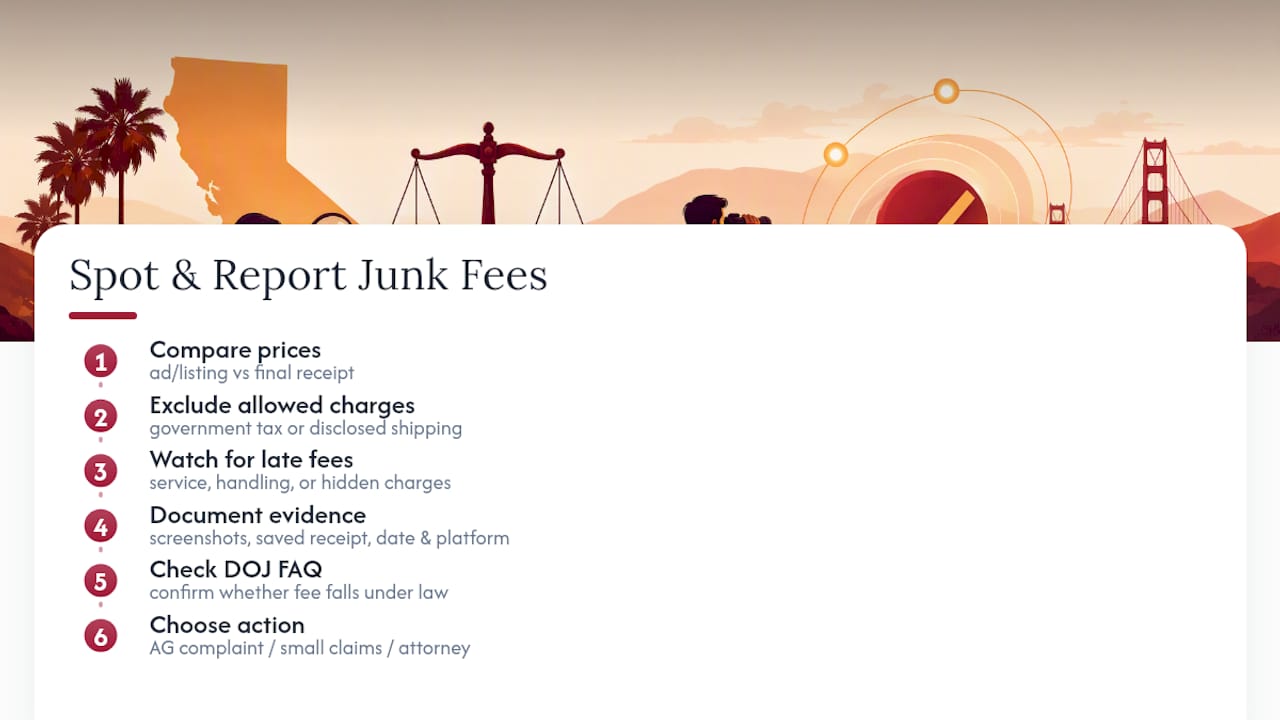
The DOJ’s FAQ page is a good first stop for confirming whether a specific fee type falls under the law before you decide how to proceed.
Is SB 478 Facing Legal Pushback or Rollout Problems?
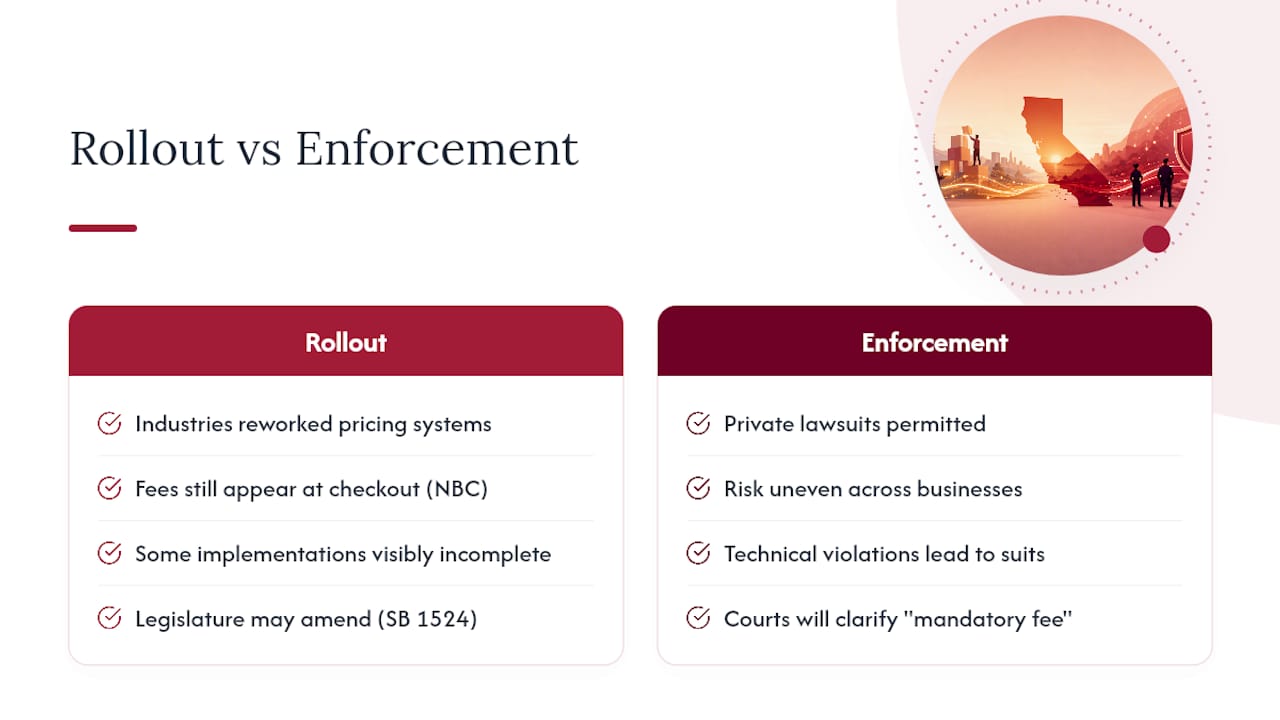
The law’s rollout hasn’t been friction-free. Industries built around fee stacking, ticketing platforms, short-term rental sites, subscription services, had to rework pricing systems fast, and some of that work is visibly incomplete. The NBC Bay Area investigation found processing fees still surfacing at checkout well after the July 2024 deadline, which suggests either slow compliance or businesses testing how aggressively the law will actually be enforced.
SB 1524’s restaurant carve-out arrived partly because the original SB 478 language created real confusion for food sellers who’d relied on separate service-charge listings for years. That amendment shows the legislature is willing to adjust the statute when a specific industry raises a legitimate implementation problem, which suggests more targeted fixes could follow as other sectors surface their own compliance friction.
The bigger controversy sits in enforcement mechanics rather than the law’s core premise. Because private lawsuits are allowed, businesses worry about inconsistent application, some companies getting sued over technical violations while larger competitors with more legal resources avoid similar exposure. That’s the tension Bloomberg Law’s analysis flags: a private right of action creates strong incentive for compliance, but it also creates litigation risk that isn’t evenly distributed across an industry. Expect continued adjustment as courts start ruling on early cases and clarify exactly how strictly “mandatory fee” gets interpreted in practice.
Publisher Perspective: When Documentation Turns Into a Real Case
Most consumer claims under laws like SB 478 don’t start as lawsuits. They start as somebody noticing a $12 difference between the ad and the receipt and wondering if it’s worth doing anything about. Individually, that $1,000 statutory minimum can look like it’s not worth the hassle. Multiply it across thousands of customers hit by the same pricing pattern, and it becomes a very different conversation, which is exactly the kind of consumer class action fact pattern this firm handles regularly.
The evidence that actually moves a case forward is almost always the boring stuff: dated screenshots, saved receipts, and a clear paper trail showing what price was advertised versus what was charged. Cases built on vague recollection rarely go anywhere. Cases built on a folder of screenshots taken the day of the transaction move fast.
If you’ve documented a fee that looks systemic rather than accidental, that’s the point to talk to a consumer-litigation attorney rather than just disputing the charge yourself. Bring your screenshots, receipts, and any written communication with the business to that conversation.
— Mark
Get a Free Case Review if You Paid a Hidden Fee in California
Javitchlawoffice handles consumer protection and deceptive-pricing cases across California, including claims involving hidden fees that should have been disclosed under SB 478.
If a business advertised one price and charged you another, that gap can be worth pursuing, especially if the same pattern is hitting other customers too. Before your consultation, gather what you already have: screenshots of the advertised price, your final receipt or confirmation, the dates involved, and any emails or texts with the seller. Fee structures across industries vary widely, and understanding how trading fees or other mandatory charges get disclosed can help you spot a pattern faster in your own case.
Javitchlawoffice’s consumer class action team reviews false-pricing and hidden-fee claims for free. If your situation looks like it fits a broader pattern rather than a one-off billing mistake, that’s exactly the kind of case worth a real conversation. Reach out through the firm’s consumer class action page to get your documents reviewed and find out where your case actually stands.
This article is general information, not a substitute for advice from a qualified lawyer. Consult a qualified legal professional about your own circumstances before acting on anything here.
Sources
- SB 478 - Hidden Fees | State of California - Department of Justice - Office of the Attorney General
- SB 1524 bill page
- CA banned “hidden” fees, but we still found them – NBC Bay Area
FAQ
What Are Considered Junk Fees Under California Law?
Junk fees are mandatory charges added to an advertised price after the fact, such as processing fees, handling fees, mandatory service charges, or automatic gratuities that weren’t included in the original number.
What Are Some Common Examples of Junk Fees?
Common examples include online convenience fees at ticket checkout, resort fees added after booking a hotel room, mandatory service charges on vacation rentals, and handling fees bundled separately from shipping.
Do I Have to Pay California’s $800 LLC Fee Every Year?
That’s a separate tax obligation, not a junk fee under SB 478. It’s an annual franchise tax the state imposes on LLCs, and it falls under the government-fee exception the Honest Pricing Law specifically excludes from its advertised-price requirement.
What Is the 80/80 Rule in California?
The 80/80 rule is a separate sales tax provision for food and beverage sellers, unrelated to SB 478’s pricing disclosure rules. It determines whether a food business’s sales are taxed based on the relative share of food products versus prepared meals, and it doesn’t affect how mandatory fees must be disclosed under the Honest Pricing Law.
Can I Sue a Business for a Hidden Fee in California?
Yes. SB 478 allows a private right of action with statutory damages starting at $1,000 per violation, plus attorney’s fees, and a consumer class action team reviews these claims for California residents affected by deceptive pricing.