
Under California law, retail gift cards generally do not expire. Cal. Civ. Code §1749.5 bars an expiration date or service fee on most gift certificates sold in the state, and a card issued without one stays valid until it is redeemed or replaced. The most consequential recent change: SB-22 raises the cash-out threshold for small remaining balances from $10 to $15, effective April 1, 2026. A handful of narrow exceptions still apply, and they’re worth knowing before you assume every card in your wallet is protected.
TL;DR:
- Most retail gift cards sold in California cannot have expiration dates or service fees, making them valid until fully redeemed or replaced, regardless of age since 1997.
- Only multi-seller bank-issued cards, promotional, fundraising, or perishable goods cards are allowed to have expiration dates or fees if properly disclosed in at least 10-point type.
- The cash-out threshold for small remaining balances increases from $10 to $15 effective April 1, 2026, enabling more consumers to redeem unused funds for cash.
- Service or dormancy fees are illegal unless the specific conditions—such as low balance, proper disclosure, and no activity for 24 months—are strictly met.
- Consumers should photograph gift cards before use and request cash redemptions directly to protect their rights and provide evidence in disputes.
Table of Contents
- Gift Card Expiration in California: What §1749.5 Actually Says
- When Gift Cards Can Legally Expire in California
- Getting Cash Back: The New $15 Threshold
- Are Gift Card Fees Legal in California? What to Watch For
- What to Do If a Merchant Won’t Honor Your Rights
- Enforcement and Compliance: What Businesses Need to Know
- When Gift Card Disputes Need a Lawyer
- Why the $15 Change Matters More Than People Realize
- Get Help With a Gift Card Dispute in California
- Sources
Gift Card Expiration in California: What §1749.5 Actually Says
The statute is blunt. A business cannot sell a gift certificate that carries an expiration date or charges a service fee, full stop, for the vast majority of retail cards issued in California. Cal. Civ. Code §1749.5 states that a certificate sold without an expiration date “is valid until redeemed or replaced,” which means a $50 gift card bought at a California retailer in 2019 is just as spendable today as it was the day you bought it.
The DCA’s Legal Guide S-11 translates that statutory language into plain consumer terms: most retail gift certificates cannot carry an expiration date or a service fee, and any card sold after January 1, 1997, can be redeemed for cash or a replacement once its balance drops low enough. That 1997 date matters. It’s the line California drew when the law first took effect, and it’s why some very old cards issued before that point may fall outside the protection.
A few things follow directly from that language:
- The card stays redeemable indefinitely unless you use it up or the merchant replaces it.
- No monthly maintenance charge, activation fee, or “convenience fee” can quietly drain the balance.
- The rule covers single-seller retail cards, meaning cards good at one store or one restaurant chain, which is the vast majority of what you’ll find at a checkout counter.
When Gift Cards Can Legally Expire in California
Not every card on the rack is covered. California carved out specific categories where an expiration date or fee is lawful, and knowing the difference saves you a frustrating argument at customer service.
- Open-loop, multi-seller cards. A prepaid Visa or Mastercard gift card usable at multiple unrelated merchants isn’t a “single-seller” gift certificate under §1749.5. These bank-issued cards fall under federal rules instead, and the FDIC notes they can carry expiration dates or inactivity fees that state law wouldn’t allow on a retail card.
- Promotional and fundraising cards. A card given away free as part of a promotion, or sold as part of a fundraising drive, can expire, but only within 30 days and only if the expiration is disclosed clearly.
- Perishable-goods cards. Cards tied to items with a genuine shelf life, think a card redeemable only for cut flowers or a Thanksgiving turkey, can carry a shorter window.
Any lawful expiration or fee has to be printed on the card itself in at least 10-point type. If you’re holding a card and the front doesn’t clearly disclose an expiration date in readable capital letters, that’s a red flag worth documenting.
Getting Cash Back: The New $15 Threshold
California has long given consumers the right to cash out a low remaining balance instead of losing it to a forgotten drawer or a store that closes. The mechanics are changing this year in a way that actually helps.
- Under the existing rule, a gift certificate sold after January 1, 1997, with a value of less than $10 could be redeemed for cash.
- SB-22 raises that threshold to $15, effective April 1, 2026, meaning more small balances qualify for a cash payout instead of sitting unused.
- To use this right, ask the cashier directly to redeem the remaining balance in cash rather than applying it toward a purchase, since many registers won’t do this automatically.
- Merchants sometimes offer a replacement card instead of cash even when cash redemption applies. You’re entitled to insist on the statutory remedy, and putting that request in writing strengthens your position if the dispute continues.
The legislative reasoning behind the bump is straightforward: small balances under $10 rarely got redeemed at all, they just sat there as free money for the retailer. Raising the threshold to $15 is a direct attempt to close that gap.
Are Gift Card Fees Legal in California? What to Watch For
Service fees and dormancy fees are illegal on most retail gift cards in California, period. But the law does carve out one narrow exception, and merchants frequently get the disclosure wrong.
A dormancy fee is only lawful when every one of these conditions is met:
- The card’s remaining value is $5 or less at the time the fee is charged.
- The fee itself doesn’t exceed $1 per month.
- At least 24 months have passed with no activity on the card.
- The card is reloadable.
- The fee terms are disclosed in at least 10-point type.
According to Casetext’s summary of §1749.5, this exception is narrow by design, and a lot of merchant disclosures fail to meet the font-size and placement rules that make it enforceable. If a retailer can’t produce a disclosure that meets every one of those five conditions, the fee is unlawful, no matter what the fine print claims.
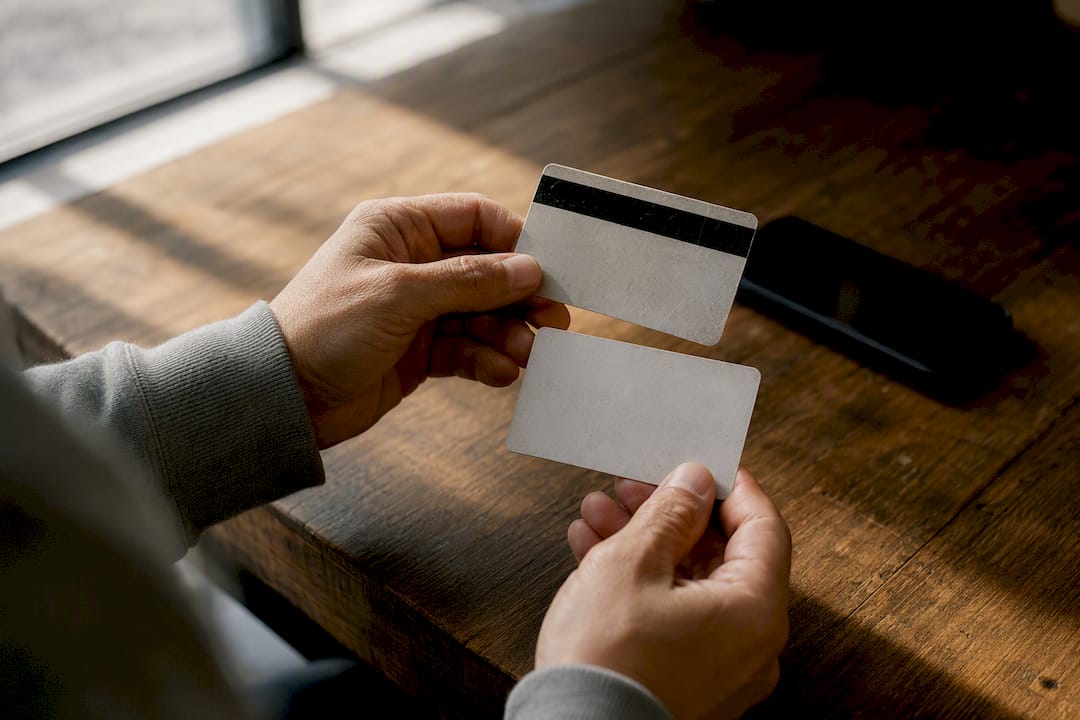
Pro Tip: Take a photo of both sides of any gift card before you use it. If a fee later shows up that wasn’t disclosed in readable print on the card itself, that photo is your proof.
What to Do If a Merchant Won’t Honor Your Rights
Merchants who ignore these rules usually aren’t being malicious, they just haven’t updated their point-of-sale training. Here’s how to push back effectively.
- Read the card first. Check the front and back for any printed expiration date or fee disclosure before you argue about anything.
- Ask for a manager on the spot. Frontline staff often can’t override register defaults, but a manager usually can process a cash redemption manually.
- Document everything. Photograph the card front and back, keep the receipt, and note the date, time, and employee name if the merchant refuses.
- Escalate if refused. File a complaint with the California Department of Consumer Affairs, contact the California Attorney General’s office, or consider small-claims court for an isolated dispute involving modest money.
- Watch for a pattern. If the same retailer is turning away multiple customers for the same reason, that’s the kind of evidence that supports a broader legal complaint rather than a single small-claims filing.
Agencies don’t move fast, so expect weeks rather than days for a response. The stronger your paper trail, the faster a resolution tends to come.
Enforcement and Compliance: What Businesses Need to Know
Violating §1749.5 isn’t a theoretical risk. Enforcement comes from several directions at once: the California Department of Consumer Affairs, the Attorney General’s office, and private plaintiffs who can bring small-claims actions or, when the violation is widespread, class actions. Sonoma County’s district attorney settled a case against Chipotle over exactly this kind of violation, a reminder that even large, sophisticated companies get this wrong.
Remedies can include forced cash redemption, replacement cards, injunctions barring the practice going forward, statutory penalties, and attorney’s fees once litigation is involved.
For businesses, the compliance checklist is short:
- Strip expiration dates and service fees from every card that doesn’t clearly qualify for a statutory exception.
- Disclose any lawful exception in 10-point type on the card itself, not buried in a receipt or website terms page.
- Train register staff to process cash-out requests instead of defaulting to store credit.
A retailer that gets this wrong once might get a warning. A retailer that gets it wrong for thousands of customers gets a lawsuit, and the California credit card surcharge disclosure rules follow a similar logic: disclosure that isn’t clear and prominent isn’t disclosure at all.
When Gift Card Disputes Need a Lawyer
Javitch Law Office handles California consumer protection matters, including patterns of unlawful gift card practices, false pricing, and other deceptive retail conduct, with a jurisdiction that reaches statewide and beyond. Most single-card disputes resolve at the register or through a DCA complaint. Legal representation becomes worth considering when a retailer refuses cash redemption after a documented request, when a dormancy fee shows up without the required disclosure, or when the same issue appears to be hitting many customers rather than just you.
If you’re building a case, the firm typically asks for receipts, photos of the card front and back, and any written correspondence with the merchant. From there, the next step depends on scale: an individual complaint, or a broader look at whether the practice affects enough customers to justify consumer class action litigation.
Why the $15 Change Matters More Than People Realize
Most coverage of California’s gift card law treats it as settled, static territory: cards don’t expire, end of story. That misses what’s actually happening this year. The jump from a $10 to a $15 cash-out threshold isn’t a rounding adjustment, it’s an acknowledgment that the old number wasn’t doing its job. Balances under $10 almost never got redeemed. Retailers kept the float. Raising the number to $15 pulls more forgotten cards back into consumers’ pockets, and I’d argue that’s the more important story here than the no-expiration rule everyone already assumes exists.
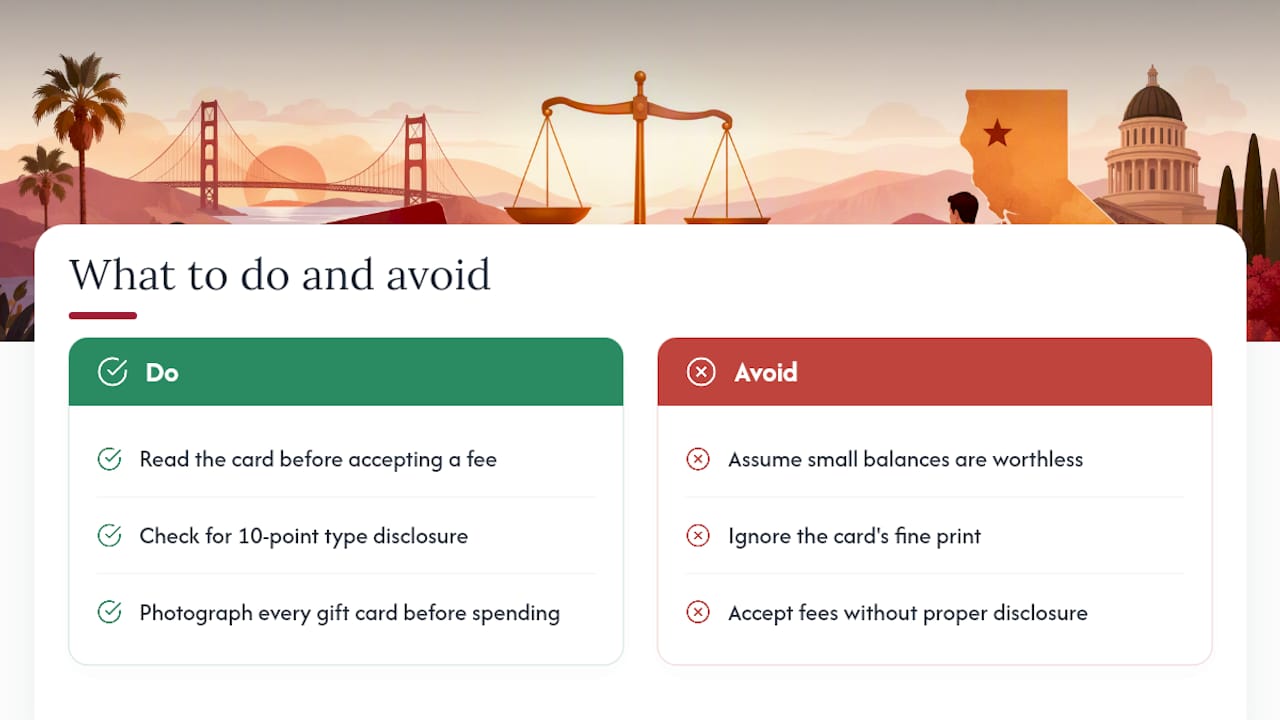
The bigger blind spot, though, is disclosure. Consumers fixate on whether a card can expire and rarely check whether a fee is disclosed the way the law actually requires, in 10-point type, on the card itself. That’s the detail that turns a “legal” dormancy fee into an unlawful one, and it’s the detail most people never check. If you take one thing from this article, take that: read the card before you accept the fee.
The other habit worth building is boring but effective. Photograph every gift card before you spend it down. It costs ten seconds and it’s the single strongest piece of evidence if a dispute ever comes up.
— Mark
Get Help With a Gift Card Dispute in California
Javitch Law Office is the option for California consumers facing a retailer that won’t honor cash redemption, keeps quiet about an illegal fee, or is doing it to more than just you, without the cost or delay of fighting a corporate legal team alone.
The firm’s consumer class action practice covers exactly this kind of dispute: unlawful gift card fees, false pricing, auto-renewal violations, and other deceptive retail practices that hit more than one customer at a time. If you’ve already filed a complaint with the Department of Consumer Affairs and the merchant is still stonewalling, or if you suspect the same violation is happening to other customers at the same chain, that’s the point to reach out. Bring your receipts, your photos of the card, and any written correspondence, and request a case consultation to find out whether your situation fits an individual claim or a broader class action.
This article is general information, not a substitute for advice from a qualified lawyer. Consult a qualified legal professional about your own circumstances before acting on anything here.
Sources
- Bill Text - SB-22 Gift certificates. - California Legislative Information
- What you should know about gift cards - FDIC Consumer Resources
Recommended
- Credit Card Surcharge California: What You Need to Know | Javitch Law Office
- California’s 90 Day Price Rule: Fighting Deceptive Pricing Practices | Javitch Law Office
- Click to Cancel California: What Consumers and Businesses Must Do | Javitch Law Office
- Yes, Source of Income Discrimination Is Illegal in California | Javitch Law Office