
If a landlord rejects you, charges you more, or slow-walks your application because you pay rent with a Housing Choice Voucher, disability income, or any other lawful source of income, that’s illegal under California’s Fair Employment and Housing Act (FEHA), as amended by SB 329, and under Cal. Code Regs. Tit. 2, § 12141. Do three things now:
- Document everything. Save the rental ad, texts, emails, and notes from every phone call.
- File a complaint with the California Civil Rights Department (CRD), the state agency that investigates these cases.
- Talk to a housing discrimination attorney before evidence disappears or deadlines pass.
Key Takeaways
Source of income discrimination is illegal in California under FEHA, SB 329, and Cal. Code Regs. Tit. 2 § 12141, and tenants who document violations early have the strongest path to enforcement.
| Point | Details |
|---|---|
| Verdict is clear | California law bans source of income discrimination, including refusing Section 8 vouchers, under FEHA and Section 12141. |
| Watch for adverse actions | Refusal to negotiate, inferior terms, misrepresented availability, and blocked inspections all count as violations. |
| Income math matters | Landlords must apply income multipliers only to your rent share after subsidy, not the full contract rent. |
| Two enforcement paths | You can file with the California Civil Rights Department, pursue a private lawsuit, or do both. |
| Get legal help early | Javitch Law Office evaluates California housing discrimination claims and helps preserve evidence before deadlines pass. |
Table of Contents
- What Source of Income Discrimination Means Under California Law
- Do Landlords Have to Accept Section 8 Vouchers in California?
- How to Enforce Your Rights: CRD Complaint or Private Lawsuit?
- Common Landlord Defenses (and How to Rebut Them)
- When to Contact a Housing Discrimination Attorney
- Where Else to Turn for Help in California
- Why California’s Protections Matter
- How Javitch Law Office Can Help With Your Case
- Frequently Asked Questions
- Sources
What Source of Income Discrimination Means Under California Law
California’s Government Code, through FEHA, protects “source of income” as its own category, separate from race, disability, or familial status. The state’s Fair Employment and Housing Act defines it broadly: any lawful, verifiable income paid directly to a tenant, to a representative acting on the tenant’s behalf, or straight to the landlord. That covers Social Security, disability benefits, child support, and, critically, federal, state, and local housing subsidies including Section 8 vouchers.
Cal. Code Regs. Tit. 2, § 12141 spells out what counts as an illegal “adverse action.” Here’s what that looks like in practice:
- A landlord flatly refuses to rent to you once you mention a voucher.
- An ad says “no Section 8” or “no vouchers accepted.”
- Voucher holders face a separate, slower application process than cash-paying applicants.
- You’re charged a higher security deposit specifically because you use assistance.
- The landlord refuses to complete required program paperwork or allow a Housing Quality Standards inspection.
- A unit is suddenly “no longer available” the moment you disclose your voucher, then relisted afterward.
Pro Tip: Source of income bias often works as a stand-in for race or disability discrimination. Landlords rarely say the quiet part out loud, so tracking how differently voucher holders are treated compared to other applicants, in writing, is often the strongest evidence you’ll have.
Do Landlords Have to Accept Section 8 Vouchers in California?
Generally, yes. SB 329 rewrote FEHA specifically to close a loophole that let landlords reject tenant-based rental assistance while claiming they weren’t discriminating against a protected class. Once a landlord accepts rental applications at all, they can’t turn away a qualified applicant purely because rent will be paid partly or fully through a voucher.
A few practical rules trip landlords up constantly:
- They must allow the Housing Quality Standards inspection required before voucher payments start.
- They must complete the housing authority’s paperwork rather than refusing it as “too much hassle.”
- When screening applicants using income multipliers, the CRD’s own guidance requires the math to apply only to the tenant’s share of rent after the subsidy, not the full contract rent.
Some cities layer on stronger local ordinances. Narrow exceptions exist for units bound by specific program restrictions, but “I don’t want the paperwork” isn’t one of them.
How to Enforce Your Rights: CRD Complaint or Private Lawsuit?
You generally have two enforcement paths, and they’re not mutually exclusive.
- File with the California Civil Rights Department. Submit an intake form describing what happened, when, and who was involved. Include the ad, application, denial notice, and any messages. CRD investigates, may attempt mediation, and can pursue the case further if it finds merit.
- File a private civil lawsuit. This route lets you skip agency investigation timelines and go straight to court, which can make sense when you have strong documentary evidence and want faster leverage or broader remedies.
- Do both where appropriate. In some situations, especially where race or disability is also implicated, a parallel HUD complaint strengthens your position.
Before filing either, lock down your evidence:
- Screenshots of listings and “no Section 8” language
- Application timestamps and confirmation emails
- Call logs and voicemails
- Names of witnesses who heard discriminatory statements
- Records of any inspection refusals or paperwork delays
Remedies vary by case, but they typically include injunctive relief ordering the landlord to stop the practice, compensatory damages covering out-of-pocket losses and emotional distress, and in especially egregious cases, punitive damages. Practitioner guidance consistently stresses that getting a lawyer involved early does more than build your case; it also shapes how seriously an agency investigation gets treated. California’s statute of limitations for these claims is limited, so waiting months to act can quietly cost you your options.
Common Landlord Defenses (and How to Rebut Them)
Landlords facing a complaint usually reach for a handful of stock excuses. Learning them helps you spot a pretext.
- “The unit was already rented.” Ask for the timestamp of the other applicant’s approval versus yours.
- “Our lease terms require it.” Check whether that requirement applies equally to non-voucher tenants.
- “We’re worried about inspections.” That’s not a legal excuse; HUD’s inspection requirements are standard program terms, not landlord discretion.
- “They didn’t meet our income minimum.” Verify whether the multiplier was applied to the full rent instead of your portion after subsidy, a frequent and provable error.
- A narrow live-in owner exemption may apply if the landlord rents out part of their own owner-occupied single-family home; check whether that specific situation fits before assuming it applies to you.
When to Contact a Housing Discrimination Attorney
Call a lawyer sooner rather than later if you notice any of these signs:
- A landlord who accepted your inquiry suddenly goes silent after you mention a voucher
- You’re treated differently than applicants without vouchers for the same unit
- A landlord or agent admits, verbally or in writing, that they don’t take Section 8
- You face eviction threats tied to your income source
- You lost a housing opportunity and can document what happened
Pro Tip: Attorneys can do more than file paperwork. They preserve evidence before it disappears, negotiate directly with landlords or property managers, and pursue injunctions or damages through CRD complaints or civil suits. Javitch Law Office handles civil rights and housing discrimination cases across California, and a free case evaluation costs you nothing to explore.
Where Else to Turn for Help in California
Different resources serve different purposes, so pick based on what you need:
- California Civil Rights Department: the state’s primary investigator and enforcer for FEHA violations, including source of income cases.
- HUD: the right route if race, disability, or another federally protected class is also involved, since some claims can be filed with both CRD and HUD simultaneously.
- Local tenant unions and renters’ helplines: useful for practical advice and information on city-specific ordinances that go beyond state law.
- Legal aid organizations: free or low-cost help if you can’t afford private counsel but need someone to walk you through the filing process.
Why California’s Protections Matter
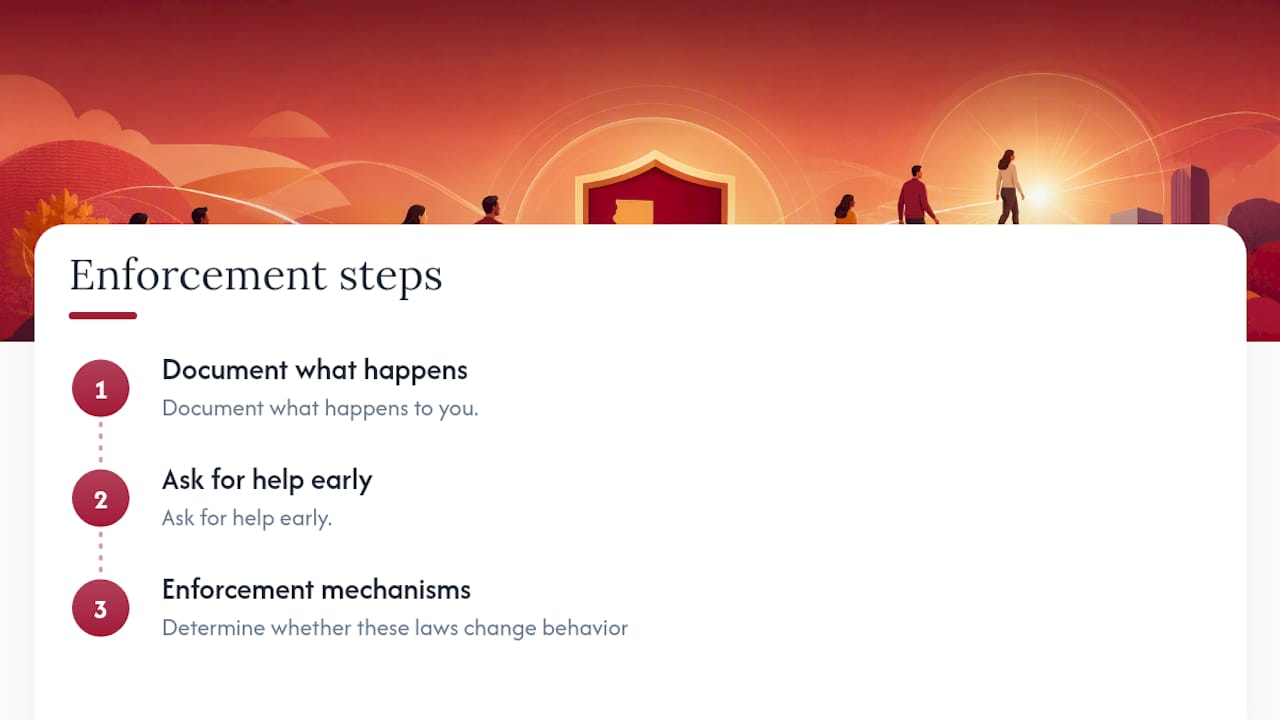
FEHA’s source of income protections exist because voucher denial functions, too often, as a backdoor for excluding people by race or disability. Research backs up what tenant advocates have argued for years: enforcement mechanisms determine whether these laws change behavior or just sit on the books. Document what happens to you. Ask for help early. Don’t assume a rejection was just bad luck.
How Javitch Law Office Can Help With Your Case
Javitch Law Office represents California tenants and housing applicants facing exactly this kind of treatment, refusals tied to vouchers, inflated deposits, misapplied income calculations, and discriminatory ads.

The firm evaluates your situation, helps preserve the evidence that makes or breaks these cases, and pursues both CRD complaints and private civil litigation depending on what gets you the strongest outcome. If your housing search has hit a wall because of how you pay rent, request a free case evaluation with the discrimination practice team and find out where you actually stand before another opportunity slips away.
Frequently Asked Questions
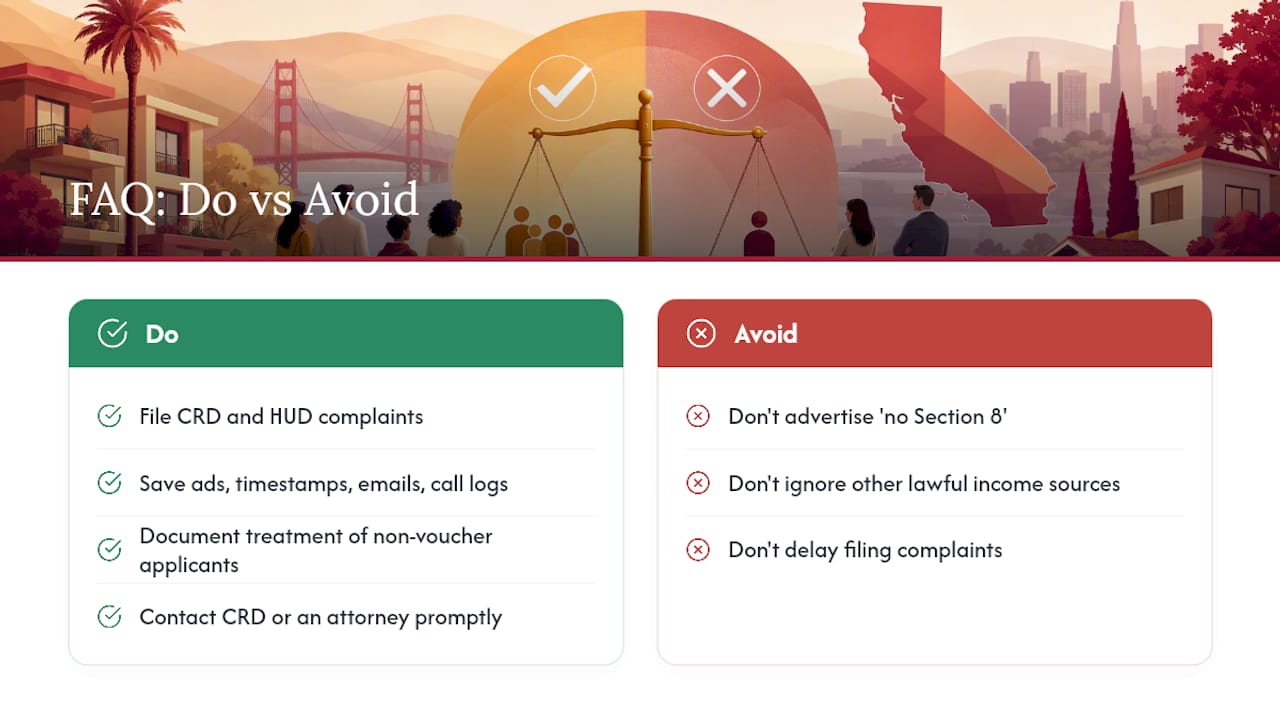
Is it legal for a California landlord to advertise “no Section 8”? No. That language violates FEHA and CRD guidance, which explicitly bans refusing voucher holders based on their source of income.
Can I file both a CRD complaint and a HUD complaint? Yes, particularly when your case also involves race, disability, or another federally protected characteristic alongside the source of income issue.
What counts as proof in a source of income discrimination case? Saved ads, application timestamps, emails, call logs, and evidence of how similarly situated non-voucher applicants were treated all strengthen a claim.
Does California’s law cover more than Section 8 vouchers? Yes. It covers any lawful, verifiable income, including Social Security, disability payments, child support, and other housing subsidies, not just Housing Choice Vouchers.
How long do I have to file a complaint in California? Deadlines are limited, so contacting the California Civil Rights Department or an attorney as soon as possible helps preserve both evidence and your legal options.
This article is general information, not a substitute for advice from a qualified lawyer. Consult a qualified legal professional about your own circumstances before acting on anything here.
Sources
- Cal. Code Regs. Tit. 2, § 12141 - Source of Income Discrimination in Rental Housing
- California Government Code (FEHA) — relevant sections on protected classes and source of income
- SOURCE OF INCOME: GENERAL OVERVIEW (California Civil Rights Department webinar materials)
- HUD — File a housing discrimination complaint