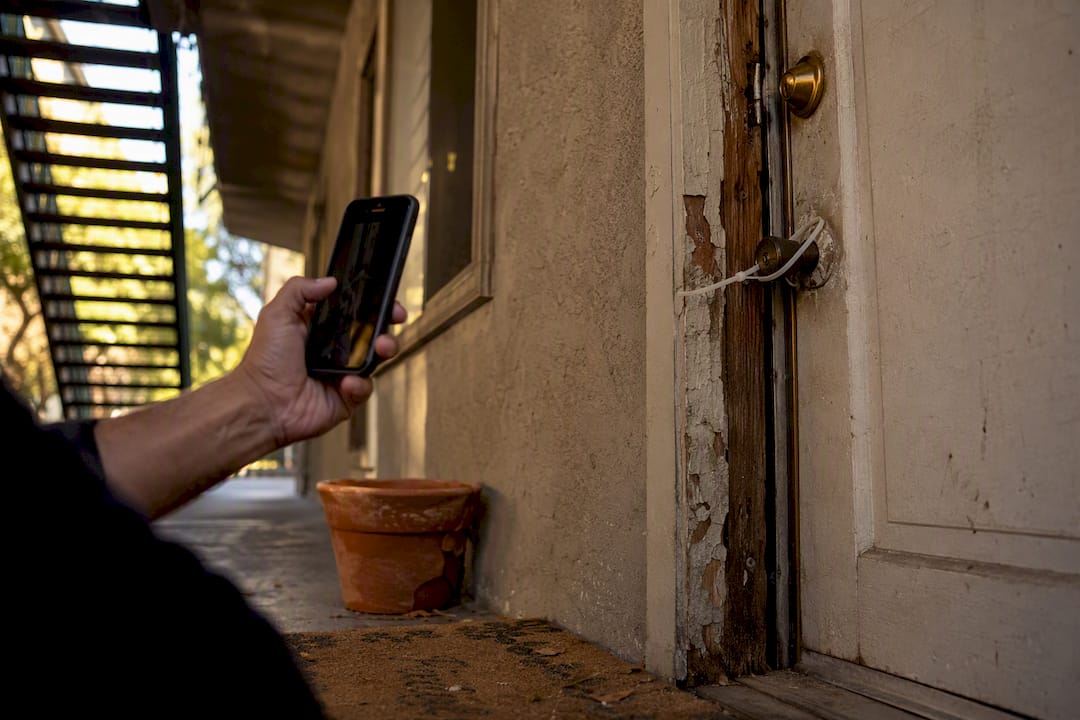
Yes. In California, if your landlord’s actions or failures make your unit uninhabitable and you vacate within a reasonable time after giving notice, you may treat the lease as terminated under the doctrine of constructive eviction. This isn’t a formal court process the landlord initiates. It’s a legal theory you invoke after the fact, once you’ve already left, to justify why you stopped paying rent and walked away from a lease that still had time on it.
The doctrine rests on two overlapping legal concepts: the implied warranty of habitability and the covenant of quiet enjoyment. Both are baked into every California residential lease whether the paperwork mentions them or not, and both get reinforced by Civil Code § 1940.2, which bars landlords from using threats or force to push a tenant out.
Your single most important next step, before anything else, is this:
- Document the conditions with photos, video, and written repair requests, then send your landlord a written notice describing the problems and demanding a fix within a specific timeframe.
Don’t vacate the same day you’re upset. Give notice, give a reasonable window to respond, and if the landlord ignores you or the problem is severe enough to threaten health or safety, get legal advice before you hand back the keys. The rest of this guide walks through the legal elements, the evidence that actually holds up in court, and the timeline that separates a winning constructive eviction claim from a tenant who owes back rent.
Key Takeaways
Constructive eviction in California requires proof of substantial landlord-caused interference, documented notice, and prompt vacatur, with the timing and evidence quality determining whether the claim succeeds.
| Point | Details |
|---|---|
| Give written notice first | Document conditions and notify your landlord in writing before considering any other step. |
| Timing controls the claim | Vacate within a reasonable time after conditions become clear; long delays weaken your case. |
| Third-party evidence carries weight | Code enforcement citations often outweigh your own photos in settlement negotiations. |
| Avoid rent withholding shortcuts | Repair-and-deduct and rent withholding carry legal risk without strict compliance and can expose you to an unlawful detainer. |
| Get legal guidance early | Javitch Law Office evaluates California habitability and harassment claims and can outline your options before you vacate. |
This article is general information, not a substitute for advice from a qualified lawyer. Consult a qualified legal professional about your own circumstances before acting on anything here.
Table of Contents
- What Does Constructive Eviction Mean Under California Law?
- What Elements Do California Courts Require to Prove a Claim?
- What Situations Commonly Trigger a Constructive Eviction Claim?
- What Steps Should You Take to Preserve Your Rights?
- What Evidence Should You Collect Before You Leave?
- What Damages and Outcomes Are Realistic in These Cases?
- Should You Stay in the Unit or Move Out Right Away?
- When Should You Bring in a Landlord-Tenant Attorney?
- What the Data Actually Tells Tenants to Prioritize
- How Javitch Law Office Can Help With Your Tenant Rights Claim
- Sources
What Does Constructive Eviction Mean Under California Law?
Constructive eviction happens when a landlord’s conduct, or failure to act, makes a rental unit so unlivable that a tenant is legally justified in leaving before the lease term ends. No sheriff shows up, no formal eviction notice gets posted. The tenant simply concludes the landlord has already broken the deal, and California law lets them treat it that way.
The legal foundation is the implied covenant of quiet enjoyment, a promise built into every lease that the tenant will get to use the property without substantial interference from the landlord. Pair that with the implied warranty of habitability, which obligates landlords to keep rental units in livable condition, and you get the two pillars supporting a constructive eviction claim. California courts, including the appellate decision in Andrews v. Mobile Aire, have described quiet enjoyment as requiring “substantial” interference, not mere annoyance.
That word “substantial” does a lot of work. A leaky faucet or a slow-to-return maintenance call doesn’t clear the bar. A three-week hot water outage in winter, a collapsed ceiling, or a landlord who cuts your electricity to force you out generally does.
Three things have to line up for a constructive eviction claim to hold:
- The landlord’s act or omission. Something the landlord did, or something they failed to fix despite notice and reasonable opportunity.
- Substantial interference. The condition has to meaningfully impair your ability to live in the unit, not just annoy you.
- Timely vacatur. You have to actually move out, and you have to do it within a reasonable time after the interference becomes clear.
Here’s the number that trips people up most: there’s no fixed day count in California statute for what counts as “reasonable” delay before vacating. Courts look at the facts case by case, which means waiting eight months after a mold outbreak to finally leave can undercut a claim that would have been solid at eight weeks. The DRE’s 2026 Landlord/Tenant Guide reflects updated habitability minimums, including working stove and refrigerator requirements, that tenants can point to when documenting a claim.
One scope note matters: this doctrine covers residential tenancies, not transient hotel stays or certain short-term lodging arrangements where different rules apply. If you’re unsure whether your arrangement counts as a residential tenancy, that’s worth confirming before you build a case around it.
What Elements Do California Courts Require to Prove a Claim?
Courts don’t take a tenant’s word that things got bad. They want proof tied to three specific elements, and each one needs its own kind of evidence.
-
The landlord knew, or should have known, about the problem and had the ability to fix it. This is where your written repair requests matter most. A text message to a property manager, an email to a landlord, or a certified letter all establish a timeline showing the landlord had notice and time to respond. If the landlord controls the building’s systems (plumbing, heating, common-area electrical), courts generally treat them as responsible even when a third-party contractor or utility caused the underlying failure, so long as the landlord had the power to remedy it and didn’t.
-
The interference was substantial, not incidental. Courts have found substantial interference in cases involving persistent sewage backups, extended loss of heat during cold months, unaddressed mold growth documented by an inspector, and repeated unauthorized entries that made a tenant feel unsafe in their own home. A single day without hot water almost never qualifies. A month without any way to bathe, heat food, or use a working toilet almost always does.
-
You vacated within a reasonable time. This is the element tenants misjudge most often. Reasonable doesn’t mean immediately, and it doesn’t mean indefinitely either. Courts in cases like Stoiber v. Honeychuck have looked at how quickly a tenant acted once it became clear the landlord wasn’t going to fix the problem.
The core judicial test isn’t whether conditions were bad. It’s whether they were bad enough, long enough, with the landlord aware and unresponsive, that a reasonable tenant would have concluded the lease was effectively over.
A subtlety worth flagging: if a third party caused the problem, a burst pipe from a neighboring unit, a citywide utility issue, a contractor’s botched repair, the claim can still survive if your landlord had the ability to intervene and simply didn’t. Courts care less about who broke it and more about who had the power to fix it and chose not to.
What Situations Commonly Trigger a Constructive Eviction Claim?
Some landlord behavior is so common in these disputes that if you recognize your own situation on this list, it’s worth taking seriously right away.
Utility shutoffs and lock changes. A landlord who cuts water, gas, or electricity, or who changes the locks without a court order, isn’t just being difficult. California’s Attorney General’s tenant guidance states plainly that only a court can lawfully evict a tenant. Any landlord who tries to force you out through a lockout or shutoff is engaging in illegal self-help, and it’s some of the strongest evidence a constructive eviction claim can have.

Refusal to fix essential systems. Heat that stays broken through winter, hot water that never gets restored, a stove that’s been “on the list” for three months. Add pest infestations that keep coming back or mold that spreads despite repeated complaints, and you’ve got the kind of pattern courts recognize as substantial interference rather than a run of bad luck.
Harassment and unauthorized entry. Landlords who enter without proper notice, show up unannounced repeatedly, or use intimidation to pressure a tenant into leaving early cross into territory prohibited by Civil Code § 1940.2. Some firms have documented cases where landlords used threats tied to a tenant’s immigration status, which is flatly illegal under California statute regardless of the tenant’s actual status.
Illegal rent hikes or lease interference used as pressure. A sudden, improperly noticed rent increase timed right after a tenant complains about conditions, or a landlord who interferes with a lease renewal to squeeze someone out, both fit the pattern of using leverage instead of following legal eviction procedure.
Pro Tip: Keep a single running log, dated entries only, noting every incident: the shutoff, the unanswered repair call, the unannounced entry. A messy pile of screenshots is weaker evidence than one clean timeline a lawyer or judge can read in five minutes.
What Steps Should You Take to Preserve Your Rights?
Once you’ve recognized a pattern that looks like constructive eviction, the order of operations matters almost as much as the underlying facts.
-
Send written notice first. Your notice should describe the specific conditions, reference any prior verbal or informal complaints, and set a clear, reasonable deadline for the landlord to respond. Email or certified mail both work, but keep a copy either way. Verbal complaints alone rarely survive a dispute over what was said and when.
-
Call local code enforcement if the landlord doesn’t respond. An inspector’s citation is some of the most persuasive evidence you can get, arguably more persuasive than your own photos, because it comes from a neutral third party with legal authority to assess habitability. The Attorney General’s office specifically directs tenants toward code enforcement and legal aid resources like LawHelpCA.org when self-help remedies fail.
-
Think carefully before doing repair-and-deduct or rent withholding. California law allows repair-and-deduct in limited circumstances, but the dollar caps and procedural requirements are strict, and getting it wrong can expose you to an unlawful detainer action for nonpayment. Withholding rent without following the correct legal steps is one of the fastest ways to turn a strong habitability claim into a weak defense against an eviction filing.
-
If you decide to vacate, do it formally. Send a written notice stating you’re vacating because the unit has become uninhabitable due to the landlord’s failure to act, return the keys, and keep a copy of everything. This formal surrender is what separates a documented constructive eviction from simply abandoning a lease, and it’s the piece tenants most often skip.
One detail that changes outcomes more than people expect: an inspector’s citation combined with even short-term relocation assistance, when available, can sometimes be a stronger strategic move than vacating immediately without third-party documentation. Moving out fast feels like the obvious response to bad conditions, but leaving before you’ve built a paper trail can leave you defending your own decision instead of pointing to independent proof.
What Evidence Should You Collect Before You Leave?
Judges and opposing attorneys respond to specifics, not adjectives. “The apartment was a mess” persuades no one. A dated photo showing standing sewage water next to a repair request from six weeks earlier does the persuading for you.
Build your file around these categories:
- Dated photos and videos of every problem, taken on multiple occasions to show duration, not just a single bad day.
- Copies of every repair request, texts, emails, letters, with timestamps intact.
- Code enforcement citations or inspection reports, which carry independent credibility no self-taken photo can match.
- Receipts for alternate housing, hotel stays, or repairs you paid for yourself.
- Medical records if a health condition, respiratory issues from mold, for example, was aggravated by the unit’s condition.
Preserve the metadata. A photo pulled from a text thread often strips the timestamp, so back up originals to cloud storage or email them to yourself the day you take them. A simple folder structure works better than a phone’s camera roll for this.
| Evidence Type | Why It Matters |
|---|---|
| Dated photos/video | Shows condition and duration over time, not a single snapshot |
| Written repair requests | Establishes landlord had notice and time to respond |
| Code enforcement citations | Independent, neutral confirmation of habitability failure |
| Housing/repair receipts | Supports a damages claim for out-of-pocket costs |
| Medical records | Ties health impact directly to unit conditions |
Organize the file chronologically, with a short written timeline at the front. If you eventually talk to a lawyer, this is the single document that saves the most time in a first consultation.
What Damages and Outcomes Are Realistic in These Cases?
Tenants who leave a habitability nightmare often ask the same question: what’s this actually worth? The honest answer is that it depends heavily on documentation quality and how long the uninhabitable conditions lasted.
Recoverable damages in a well-documented California constructive eviction case commonly include:
- Moving costs tied directly to the forced relocation.
- The rent differential if your new housing costs more than the old lease.
- A refund or credit for rent paid during the period the unit was legitimately uninhabitable.
- Attorney’s fees, where the lease or an applicable statute provides for fee shifting.
Some California cities layer additional protections on top of state law through local rent ordinances, and a few permit enhanced damages for willful landlord misconduct beyond what state statute alone provides. Whether that applies to your situation depends on your specific city’s ordinance, which is worth checking before you assume a state-only damages ceiling.
Here’s the part that surprises a lot of tenants: most of these disputes never reach a jury. They resolve through settlement, often once a landlord’s attorney sees a clean evidence file and recognizes the exposure. Non-monetary outcomes matter too, a negotiated lease termination without owed rent, a landlord agreeing to specific repairs for other units, or a settlement that avoids a credit-damaging judgment.
The flip side matters just as much when deciding how to calculate your lease’s after repair value using tools like the ARV Calculator California, which helps you estimate repair costs and housing expenses accurately. Weak documentation, a delayed departure, or a decision to withhold rent without following procedure can flip the entire case, turning a tenant with a legitimate grievance into a defendant facing an unlawful detainer for back rent. The risk runs in both directions, and it’s exactly why the evidence-first, notice-first approach matters more than speed.
Should You Stay in the Unit or Move Out Right Away?
This decision doesn’t have a universal right answer, but a few clear signals should tip the scale.
-
If there’s an immediate safety hazard, active gas leak, no heat during a cold spell, exposed electrical wiring, or an inspector’s order to vacate, leaving quickly should take priority over evidence-gathering. Your safety outranks your case file.
-
If repairs are genuinely in progress and the landlord is responsive, even if slow, staying can actually preserve stronger remedies. Document the delay, keep every communication, and let the paper trail build while you monitor whether real progress is happening.
-
If you decide to vacate, notify the landlord in writing before or immediately upon leaving, stating explicitly that you’re vacating due to uninhabitable conditions the landlord failed to remedy.
In the first 24 to 72 hours of a serious habitability failure, take photos immediately, send written notice the same day if you haven’t already, call code enforcement if there’s no response within 24 hours for urgent hazards, and start a written log before memory of exact dates and details starts to fade.
When Should You Bring in a Landlord-Tenant Attorney?
Some situations call for a lawyer immediately, not after you’ve tried everything else. If your landlord has already filed an unlawful detainer, if there’s a serious health risk like toxic mold or a gas leak, if you’re facing retaliation for a prior complaint, or if the potential damages are complex enough that you’re not confident valuing them yourself, that’s the point to stop handling it alone.
A landlord-tenant attorney typically starts with a pre-suit demand letter, which alone resolves a surprising share of these disputes once a landlord realizes there’s real legal exposure. If that doesn’t work, the next steps are filing suit for damages, defending against an unlawful detainer if one’s been filed against you, retaining experts for mold or structural issues when needed, and negotiating settlement before trial becomes necessary.
Javitch Law Office is a California-based civil rights firm with the litigation background to evaluate constructive eviction claims alongside related issues like housing discrimination and landlord retaliation. The firm’s experience extends into related civil-rights territory, including source-of-income discrimination cases, which sometimes surface when a landlord’s harassment intersects with a tenant’s protected characteristics or income source.
Before your first consultation, gather your evidence file: the timeline, the repair requests, any inspection citations, and receipts for costs you’ve already incurred. Bring your lease too. Attorneys move faster and give more precise advice when the documentation is already organized rather than scattered across texts and emails you have to dig through during the call.
Pro Tip: Write a one-page summary before your consultation: what happened, when you noticed it, what you did about it, and when you moved out (or plan to). A lawyer can assess claim strength in minutes with that in hand instead of piecing it together from your memory in real time.
What the Data Actually Tells Tenants to Prioritize
The conventional advice on this topic leans hard on “document everything,” which is true but incomplete. What the case law and agency guidance actually reveal is that timing discipline matters just as much as documentation volume. Tenants lose otherwise strong claims by waiting too long to leave, not by having too few photos.
The bigger blind spot is the assumption that vacating immediately is always the safer move. Sometimes it’s the opposite. An inspector’s citation obtained while you’re still in the unit often outweighs a stack of your own photos taken after you’ve already gone. That’s a strategic call, not a legal technicality, and it’s exactly the kind of judgment call worth making with a lawyer rather than alone.
If you take one thing from this guide, make it this: notice in writing, then act within weeks, not months. The doctrine rewards tenants who move with purpose and paper trails, not the ones who wait for things to somehow resolve themselves.
— Mark
How Javitch Law Office Can Help With Your Tenant Rights Claim
If you’re staring down a habitability nightmare or a landlord who’s crossed into harassment and illegal pressure tactics, you don’t have to build the evidence file and evaluate your legal options solo. Javitch Law Office is a California-based civil rights firm that handles constructive eviction disputes alongside the discrimination and housing bias cases that often run parallel to them, retaliation, harassment tied to a protected characteristic, or a landlord using a tenant’s background as leverage.

What sets this apart from handling it alone is straightforward: you get a firm that already understands how California housing statutes intersect with civil-rights law, so if your situation involves both a habitability failure and discriminatory treatment, one legal team handles the whole picture instead of forcing you to coordinate two separate cases. The firm’s experience spans consumer protection litigation too, including cases like its click-to-cancel work, which reflects the same pattern of holding institutions accountable for using pressure tactics against consumers.
If your situation involves housing discrimination layered on top of habitability issues, the firm’s discrimination practice team can evaluate your case and outline what a claim might look like. Start with a case review to find out where you stand before any deadline works against you.
Sources
- California Department of Real Estate — Landlord/Tenant Guide 2026 edition
- California Office of the Attorney General — Tenant rights and resources
- California Legislature — Civil Code § 1940.2
- Andrews v. Mobile Aire — California Court of Appeal opinion
- Constructive eviction in California: elements and damages — LegalClarity
Recommended
- Yes, Source of Income Discrimination Is Illegal in California | Javitch Law Office
- California Anti-SLAPP Law: What Defendants and Lawyers Need to Know | Javitch Law Office
- Click to Cancel California: What Consumers and Businesses Must Do | Javitch Law Office
- Antisemitic & Racial Discrimination Attorneys | Javitch Law Office